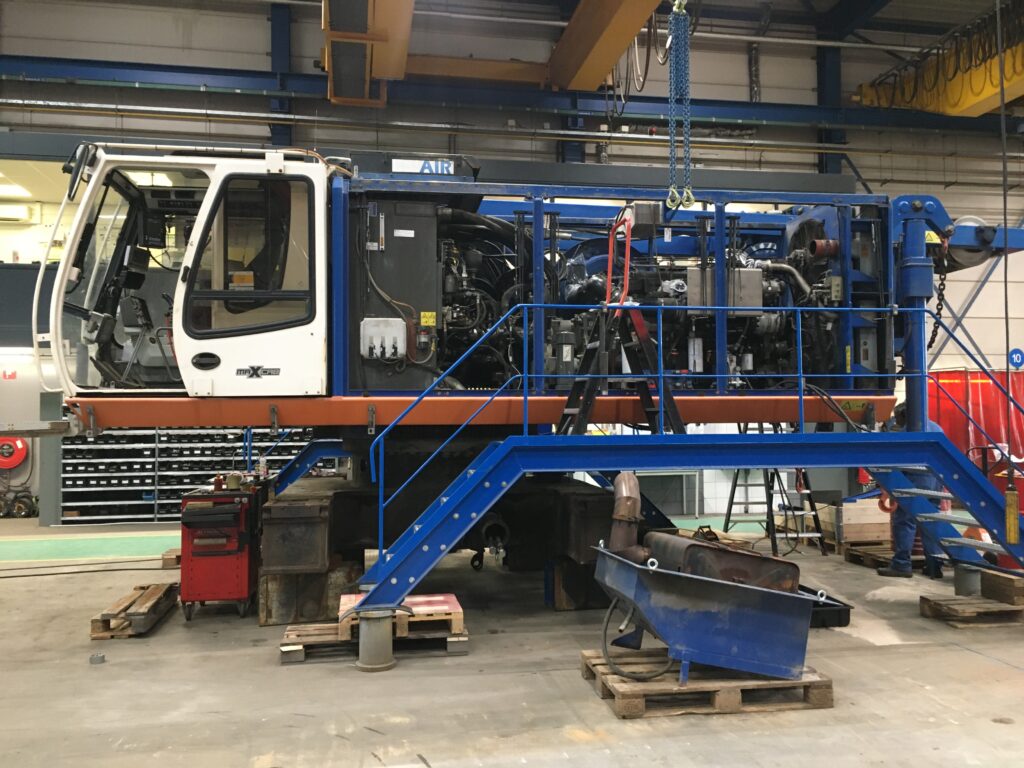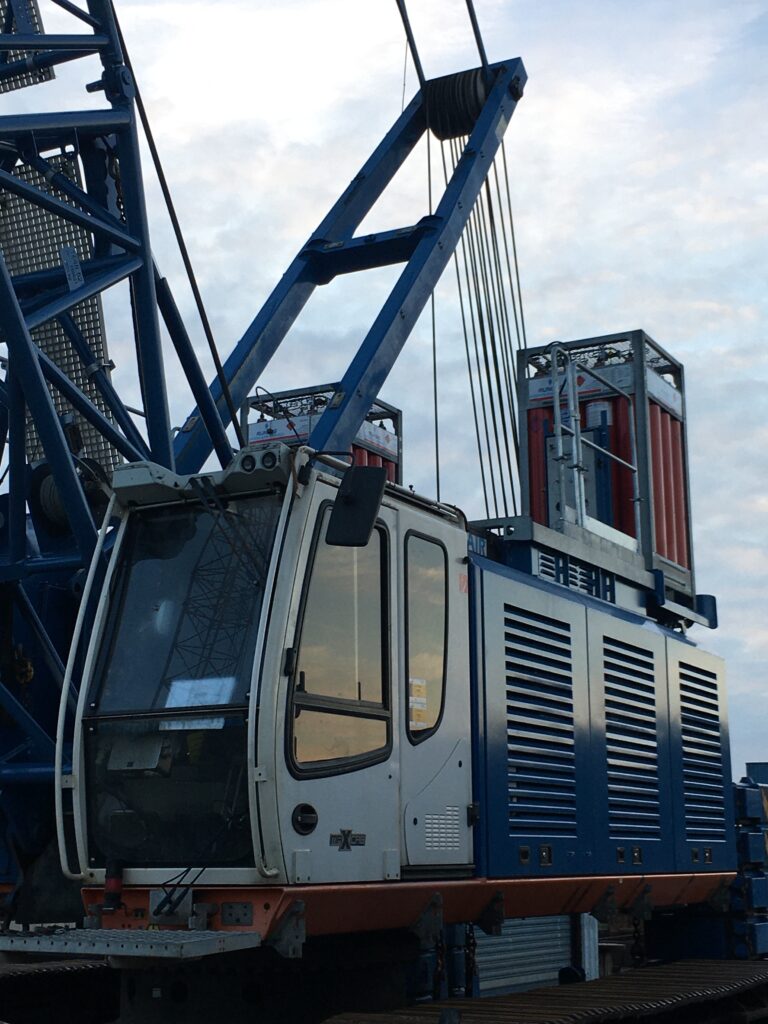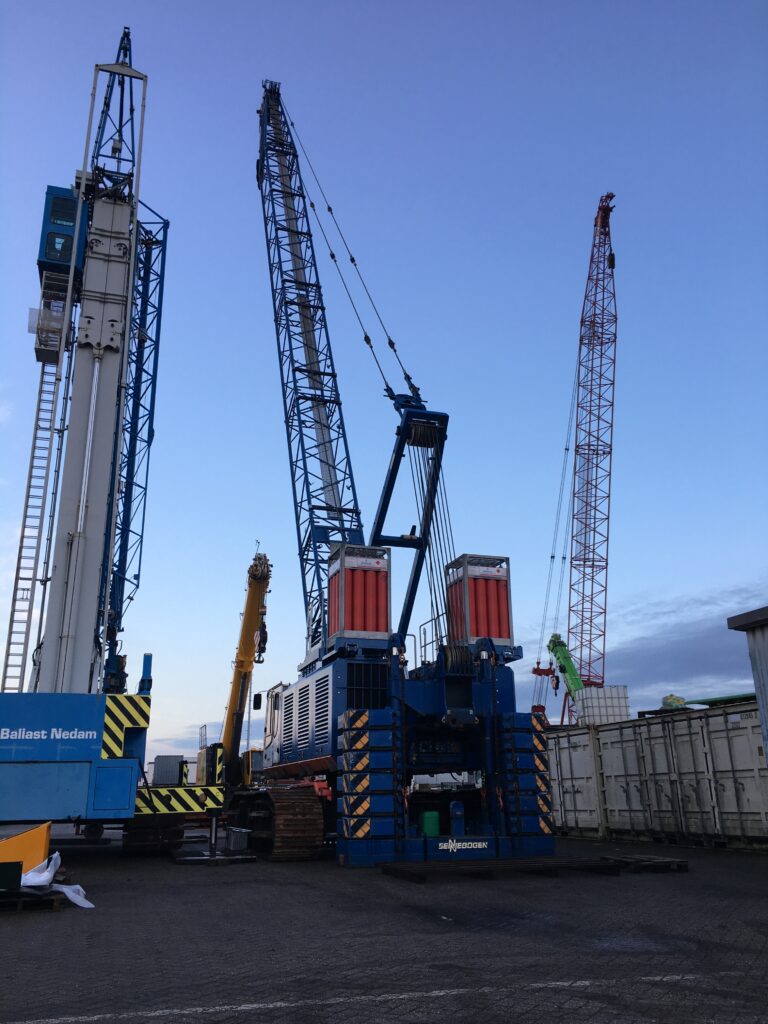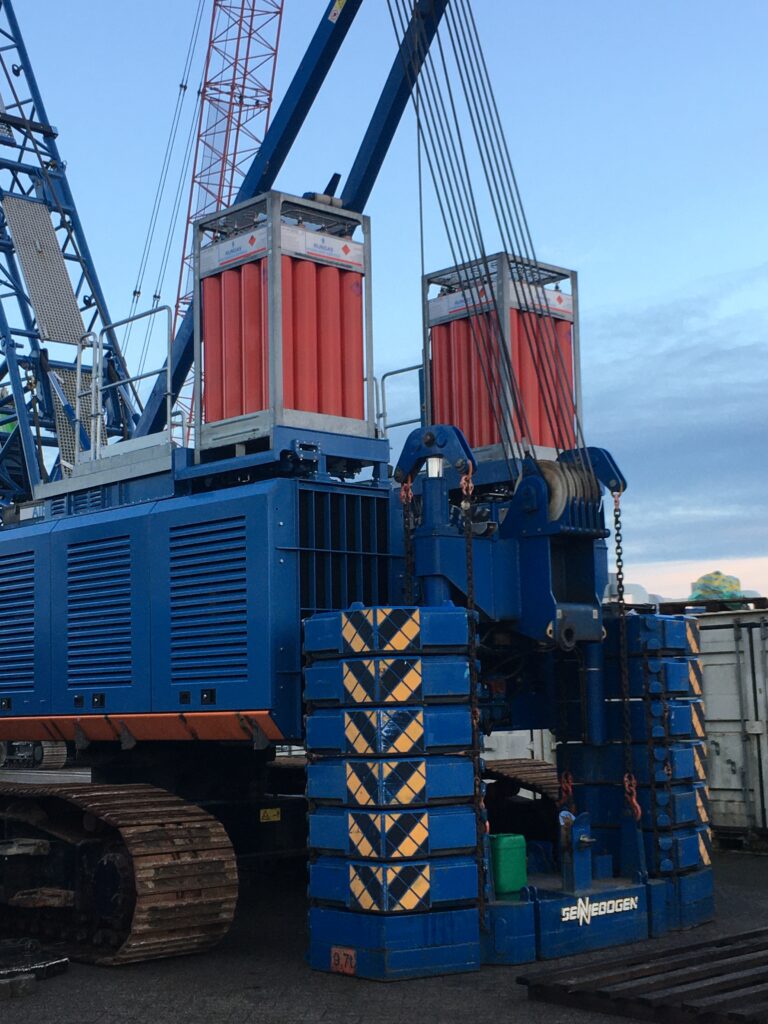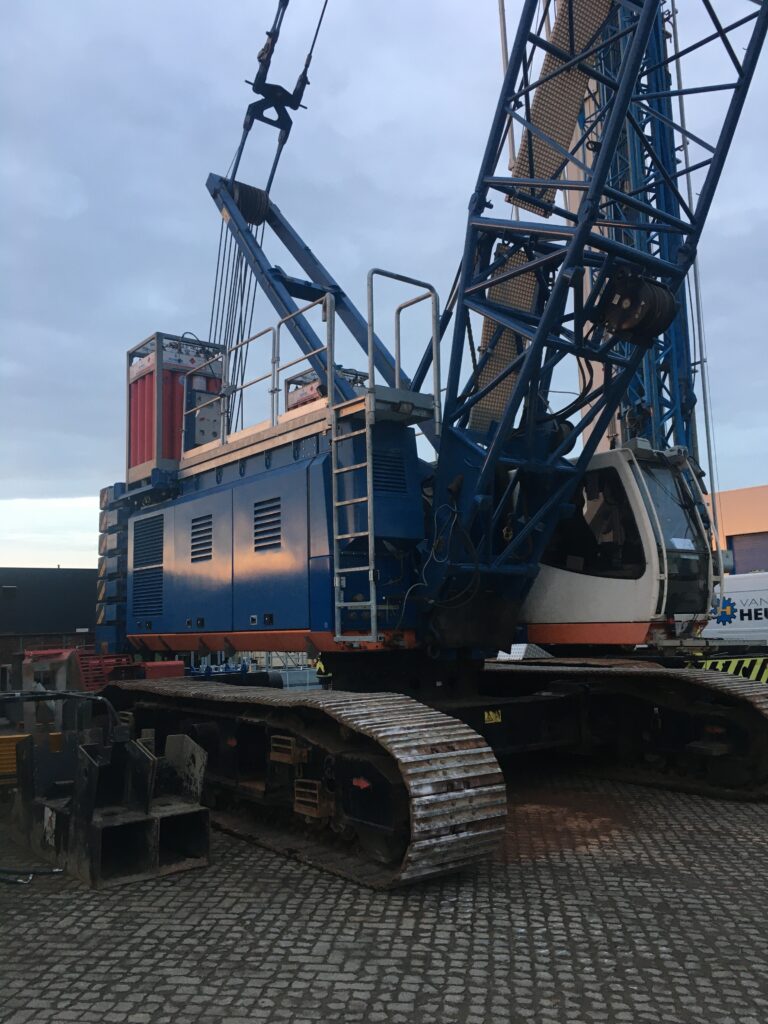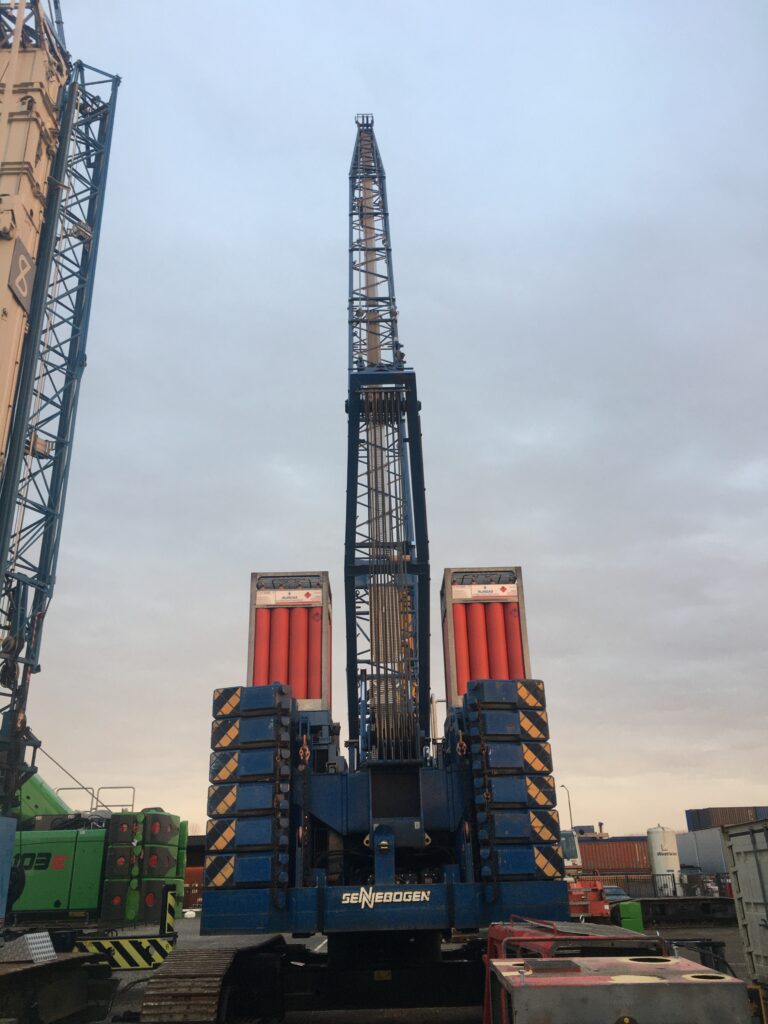


The choice for hydrogen was a conscious one: the crane can operate with zero emissions without CO₂ and NOx emissions, no mains power is required on the construction site to charge batteries, and no heavy batteries need to be replaced. This makes construction sites cleaner, quieter and more flexible, and projects can also proceed safely in nitrogen-sensitive areas.
Accenda specializes in sustainable drive systems and hydrogen technology. Together with them, Van den Heuvel is responsible for integrating the fuel cell, the H₂ buffer, the PLC and all electrical and cooling components, so that the crane can operate safely, reliably and emission-free in the future.
Thanks to this conversion, CO₂ and NOx emissions are reduced to 0 compared to a traditional diesel crane. This is in line with VSF’s ambition to operate completely emission-free by 2035. VSF strives for a climate-neutral, circular and healthy built environment.
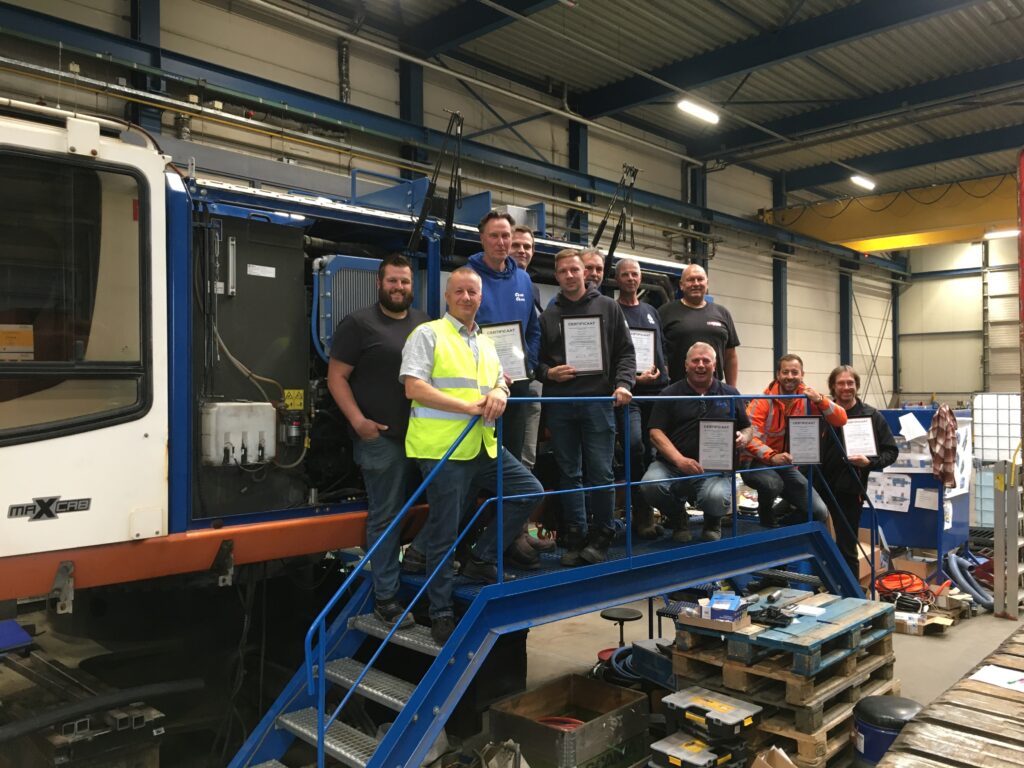
The development and conversion of this machine takes place in close collaboration, with VSF involved from the start. Together, we are taking an important step into the future of sustainable foundation cranes.